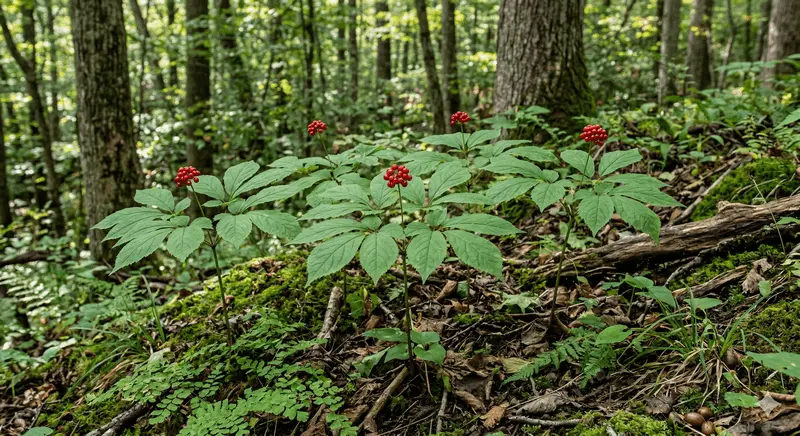
For centuries, the shadowed slopes of the Appalachian Mountains have hidden one of the world's most valuable wild herbs: American Ginseng (Panax quinquefolius). Known to foragers as "Green Gold," the wild root is highly prized for its medicinal properties. However, due to over-harvesting and habitat loss, this slow-growing perennial is now a protected species.
In Pennsylvania, harvesting ginseng is a tradition steeped in history, but modern harvesters must navigate a complex web of state and federal laws to ensure they stay on the right side of the law.
Where the Digging Stops: Public Land Restrictions
The most common mistake new foragers make is assuming that "public land" means "open for harvest." In Pennsylvania, the legal reality is quite the opposite. Harvesting wild ginseng is strictly prohibited on virtually all public lands.
1. Pennsylvania State Parks and State Game Lands
The Pennsylvania Department of Conservation and Natural Resources (DCNR) and the Pennsylvania Game Commission have a zero-tolerance policy regarding the removal of "PA Vulnerable" plants.
-
The Restriction: It is illegal to harvest, cut, or remove ginseng from any State Park, State Forest, or State Game Land.
-
The Consequences: Violators face summary offenses, heavy fines, and the permanent seizure of their harvest. These lands are patrolled specifically during the late summer to deter poachers.
-
CITES Regulations: Because ginseng is protected under international treaty, transporting illegally harvested roots across state lines can escalate a simple citation into a federal felony.
-
Prongs: Legal plants must have at least 3 prongs.
-
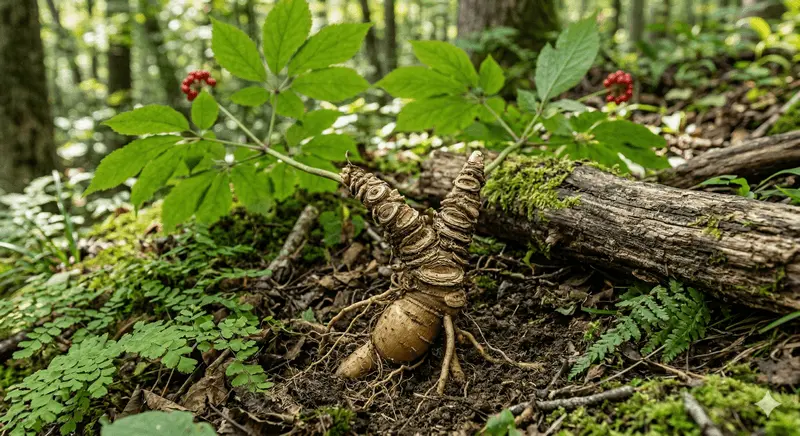
The Neck Test: If you dig a root and find fewer than four growth scars on the rhizome (neck), the law requires you to replant it immediately.
-
Record Keeping: You will be required to provide your name, address, and the county of harvest for the dealer’s records.
-
Certification: If you plan to sell your roots to a buyer outside of Pennsylvania, they must be officially certified by the DCNR. This involves an inspection to ensure the roots were harvested in-season and met all legal age requirements.
2. Allegheny National Forest (Federal Land)
While some National Forests in the southern U.S. allow limited, permit-based harvesting, the Allegheny National Forest in Pennsylvania does not. * Federal Law: Harvesting on federal land is a violation of the Lacey Act, which carries severe penalties including federal fines up to $5,000 and potential imprisonment for up to six months.
Legal Harvesting: Private Property Only
The only legal way to harvest wild ginseng in Pennsylvania is on private property with the express written permission of the landowner.
Pro-Tip: Always keep your written permission slip on your person while in the woods. If approached by a Wildlife Conservation Officer or local law enforcement, this document is your only legal shield against poaching charges.
Pennsylvania’s Biological Regulations
Even on private land, you cannot simply dig any plant you find. Pennsylvania law dictates specific biological markers that must be met to ensure the species survives for future generations.
The Five-Year Rule
A ginseng plant must be at least five years old to be harvested. You can determine the age by counting the "prongs" (clusters of leaves) and the scars on the "neck" of the root.
The Harvest Season
The legal season runs from September 1 to November 30. Harvesting "green" (undried) roots outside of this window is a crime. This timing ensures the berries have ripened, giving the plant a chance to reproduce before the root is removed.
The Seed Mandate
Sustainability is not just a suggestion; it is the law. When you harvest a legal plant, you must plant the ripe red seeds in the immediate vicinity of the parent plant, tucked at least one inch deep into the forest floor.
Selling and Documentation
If you intend to sell your harvest, you must work with a Licensed Pennsylvania Ginseng Dealer.
Summary Checklist for a Legal Harvest
| Step | Action |
| Location | Private land only; obtain written permission. |
| Date | Wait until September 1st. |
| Identification | Ensure the plant has 3 or more prongs and red berries. |
| Sustainability | Replant all seeds 1-inch deep at the site of harvest. |
| Ethics | Never "clear-cut" a patch; leave a portion of mature plants to continue the colony. |