In the deepest, shaded hollows of the Allegheny National Forest (ANF), there are places where the temperature drops ten degrees the moment you step off the trail. These are the hemlock cathedrals—stands of Eastern Hemlock (Tsuga canadensis) that have stood for centuries, creating a cool, damp microclimate that supports everything from rare mosses to wild brook trout.
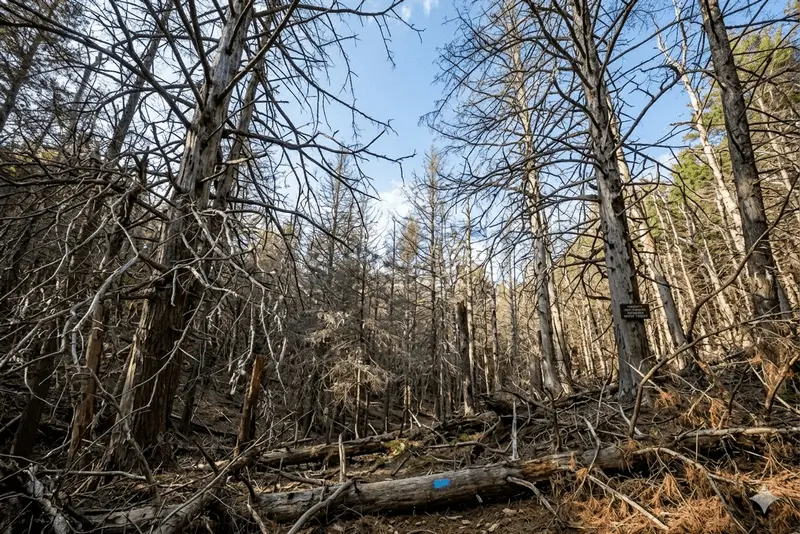
But a quiet, white-cloaked invader has arrived, and it is turning these evergreen sanctuaries into "Ghost Forests."
The Architecture of the Understory
To understand the tragedy of the ghost forests, one must first understand the hemlock's role. Often called the "Foundation Species" of the Northeast, hemlocks are the architects of their environment.
-
The Cooler: Their dense, lacy canopy blocks up to 99% of sunlight, keeping forest streams cool enough for trout to spawn even in the heat of July.
-
The Shelter: For black bears, snowshoe hares, and over 90 species of birds—like the Black-throated Green Warbler—hemlocks provide essential winter thermal cover.
-
The Elders: In the Tionesta Scenic Area, some hemlocks are over 500 years old, having survived the rise and fall of nations only to face a microscopic foe.
-
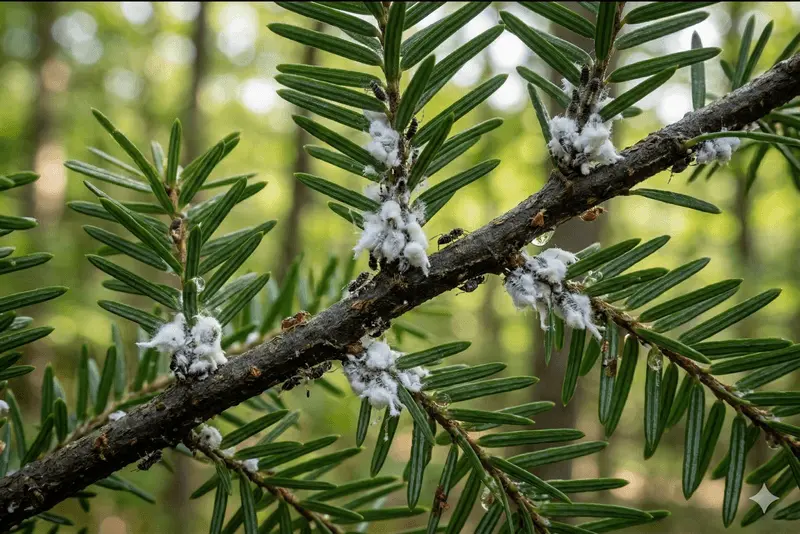
The Attack: The HWA attaches itself to the base of the hemlock needle and sucks the life-giving starches from the tree. It also injects a toxin that causes the needles to turn grayish-green, then brown, and eventually fall off.
-
The Signature: You can spot an infestation by looking at the underside of the branches. In winter and spring, the adelgids cover themselves in a white, waxy secretion that looks like tiny cotton swab tips or "wool."
-
The Result: Without treatment, a mature hemlock can die in as little as 4 to 10 years. As the needles drop and the branches bleach in the sun, the tree takes on a skeletal, silvery appearance—hence the term "Gray Ghosts."
-
Look Up (and Down): While hiking the North Country Trail or exploring Tionesta, check the undersides of low-hanging hemlock branches.
-
Report It: Use apps like iMapInvasives to report sightings. Knowing exactly where the "killing front" is located helps the Forest Service prioritize which groves to treat next.
-
Clean Your Gear: HWA "crawlers" can hitchhike on your clothes, boots, or even your dog. If you’ve been in an infested area, give your gear a good brush-down before heading to a healthy grove.
The Invader: Hemlock Woolly Adelgid (HWA)
The culprit is the Hemlock Woolly Adelgid (Adelges tsugae), a tiny, aphid-like insect native to East Asia. It was first detected in the Eastern U.S. in the 1950s and has been steadily marching across Pennsylvania.
The Battle for the Tionesta
Because the ANF holds some of the last remaining old-growth hemlock in the East, the fight to save them is a high-priority conservation effort.
1. Chemical Triage
Forest Service biologists use a method called "basal barking" or soil injections. They apply specialized insecticides (like Imidacloprid) to the base of high-priority trees. The tree absorbs the medicine, which kills the adelgids for up to seven years. This is "triage"—it saves the most ancient trees while scientists look for a permanent solution.
2. The "Silver Bullet": Biological Control
The long-term hope lies in biocontrol. Since HWA has no natural predators in the U.S., researchers have begun releasing specialized beetles from the Pacific Northwest and Japan, such as Laricobius nigrinus. These beetles eat only woolly adelgids. In the ANF, these "predator beetles" are being released in strategic locations to see if they can establish a self-sustaining population that keeps the adelgids in check.
3. Climate and Cold
Historically, the harsh winters of the Allegheny Plateau helped "knock back" HWA populations. However, as winters become milder, the adelgids are surviving in higher numbers, allowing them to push deeper into the northern reaches of the forest.
What You Can Do: "The Winter Mapping Challenge"
Winter is the best time to spot HWA because the "wool" is most visible against the dark green needles.
Conclusion
The "Ghost Forests" are a sobering reminder of how a tiny, accidental traveler can unravel an ecosystem centuries in the making. Yet, in the quiet corners of the Allegheny, there is hope. Between the precision of chemical treatment and the slow establishment of predator beetles, we are fighting to ensure that the ancient hemlocks of the Tionesta remain green, vibrant, and alive for another 500 years.