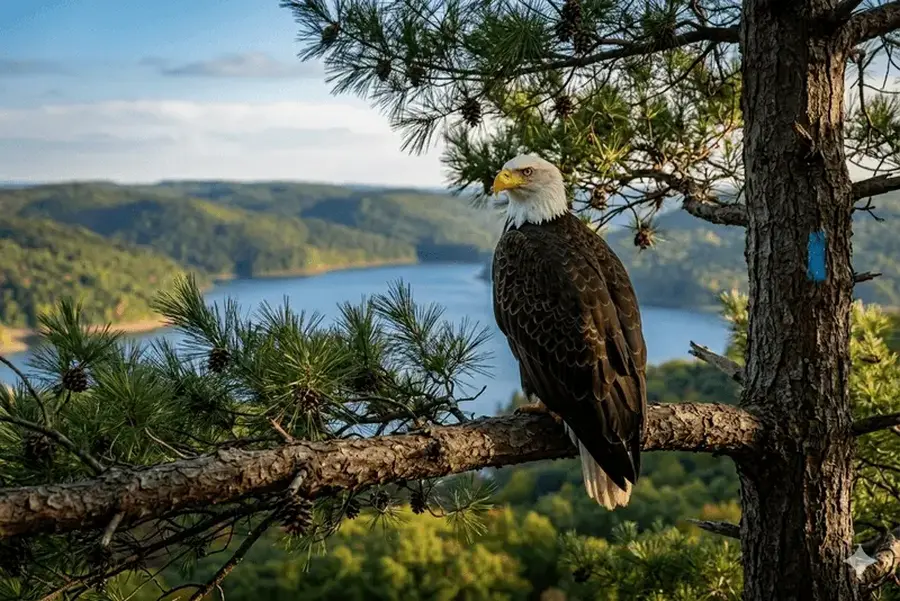
There was a time, not so long ago, when a glimpse of a white-feathered head over the Allegheny Reservoir was a once-in-a-lifetime event. In the mid-20th century, habitat loss and the devastating effects of DDT had pushed the American Bald Eagle to the brink of extinction. In 1983, Pennsylvania was down to a mere three nesting pairs statewide.
Fast forward to today, and the Kinzua Dam and Allegheny Reservoir have become the crown jewels of the eagle’s comeback. What was once a rare sight is now a daily occurrence for boaters, hikers, and residents. But why here? And how did this engineering marvel become a "luxury suite" for one of nature’s most formidable apex predators?
A Five-Star Habitat
The success of the Bald Eagle in the High Allegheny isn’t an accident; it’s the result of a perfect ecological storm. Bald eagles require three main things to thrive, and the Kinzua region provides them in spades:
-
Abundant Food: The reservoir is a literal buffet. With over 12,000 acres of water stocked with smallmouth bass, northern pike, and walleye, the eagles have a year-round grocery store at their talons.
-
Prime Real Estate: Eagles are "edge" hunters. The jagged coastline of the Allegheny National Forest provides miles of tall, sturdy white pines and sycamores that serve as the perfect platforms for nests (or "aeries") that can weigh up to a ton.
-
Minimal Disturbance: While the reservoir is a hub for recreation, its sheer size and the protected status of the surrounding federal lands provide the seclusion these birds need during the sensitive nesting months of late winter and early spring.
-
Kinzua Dam Overlook: The classic choice. Use the high-powered binoculars to scan the trees on the opposite bank.
-
Roper Hollow Boat Launch: A quieter spot where eagles are often seen patrolling the narrow corridors of the water.
-
Big Bend Recreation Area: Excellent for watching eagles hunt in the tailwaters below the dam.
-
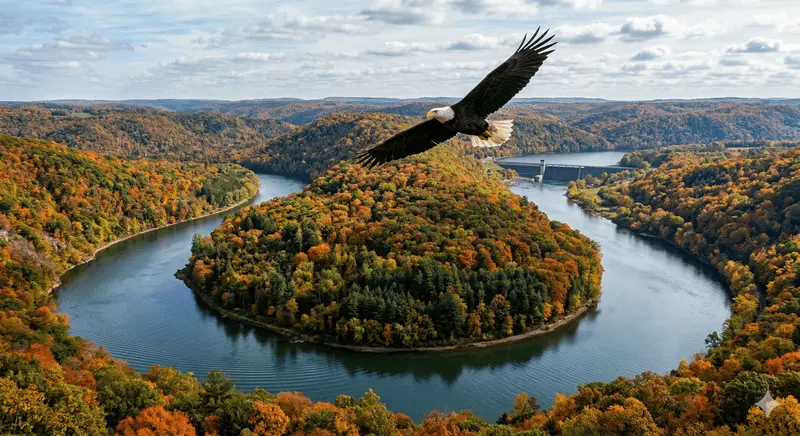
Rimrock Overlook: For a literal bird’s-eye view, look down from the cliffs to see them soaring on the thermals.
-
The Rule of Thumb: If you hold your thumb up at arm's length and it doesn't completely cover the eagle, you are too close.
-
Stay in Your Vehicle: In many areas, eagles are used to cars but will flush if they see a human silhouette walking toward them.
-
Silence the Shutter: If you are close enough that the sound of your camera’s burst mode makes the bird look at you, back away.
-
Nest Secrecy: If you find a new, active nest, enjoy it, but avoid posting the specific GPS coordinates on social media.
Tracking the Patterns
Local naturalists have noted a fascinating shift in nesting patterns. While eagles were once concentrated primarily near the dam breast—where the turbulent water keeps fish stunned and easy to catch—they have now expanded deep into the "fingers" of the reservoir. Recent surveys suggest that the density of nesting pairs in the Allegheny National Forest is among the highest in the northeastern United States.
? Best Spots for Sightings
The Ethics of the Lens: Protecting the Progress
As the population grows, so does the number of photographers hoping to catch that "National Geographic" shot. However, the Pennsylvania Game Commission warns that human interference is still the greatest threat to a successful hatch.
Tips for Ethical Observation:
The return of the Bald Eagle to the Kinzua Gazette’s backyard is more than just a win for birdwatchers—it’s a living testament to the resilience of the Allegheny wild. As we look to the skies this season, we aren’t just seeing a bird; we’re seeing a masterpiece of conservation in flight.