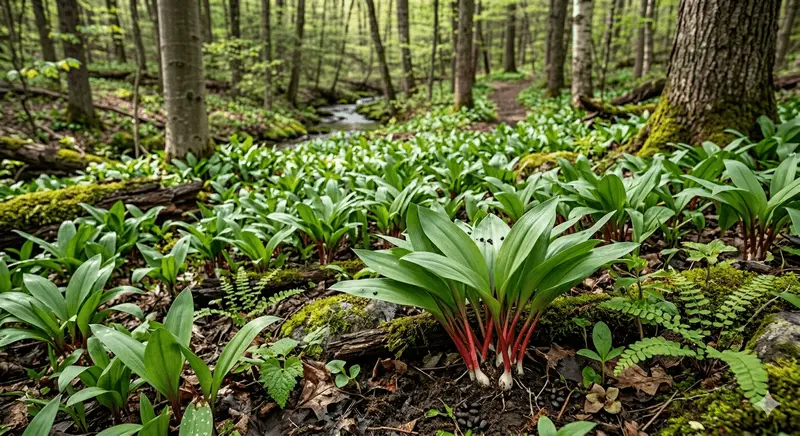
As the snow melts in the deep hollows of the North Country, a distinct, pungent aroma begins to waft through the hardwoods. It is the smell of Wild Leeks (also known as Ramps), the first true "green" of the spring and a beloved culinary tradition in the Pennsylvania Wilds.
However, unlike common garden onions, wild leeks are a slow-growing forest resource that requires a light touch to ensure they return year after year.
The Allure of the Ramp
Wild leeks (Allium tricoccum) are prized for their unique flavor—a potent cross between sweet spring onion and pungent garlic. In the region surrounding the Allegheny National Forest, "leek dinners" and "stinkfests" have been a social staple for generations. They are versatile in the kitchen, appearing in everything from morning eggs and potato soups to trendy pestos and pickled bulbs.
Legality in the Allegheny National Forest
Unlike ginseng, which is strictly prohibited, the rules for harvesting leeks in the Allegheny National Forest (ANF) are more permissive, provided you aren't looking to make a profit.
-
Personal Use: Harvesting wild leeks for personal or family consumption is permitted without a formal permit.
-
Commercial Use: Harvesting leeks to sell—whether to restaurants, at farmers' markets, or online—is strictly prohibited on National Forest land.
-
Quantity Limits: While there is no "hard number" like a bag limit, the Forest Service operates on the principle of "reasonable personal use." Typically, this is understood to be about two gallons (the size of a standard grocery bag) per person.
-
The Scent Test: The most important identification tool is your nose. If you tear a leaf and it doesn't smell strongly of onion or garlic, do not eat it.
-
The Danger: The toxic Lily of the Valley and False Hellebore can look similar to the untrained eye. False Hellebore, in particular, grows in the same wet, swampy areas as leeks but lacks the onion smell and has pleated, accordion-like leaves.
Note on Private Land: Always obtain written permission before harvesting on private property. "Leek patches" are often guarded secrets, and trespassing to dig them is a serious offense.
The Golden Rule: Sustainable Harvesting
A wild leek takes 5 to 7 years to reach reproductive maturity. If a patch is dug up entirely, it can take decades to recover—or it may vanish forever. To be a "steward of the stink," follow these best practices:
1. The "One-Leaf" Method
The most sustainable way to enjoy leeks is to harvest only one leaf per plant, leaving the second leaf and the bulb in the ground. The leaves contain the same intense flavor as the bulb, and this method allows the plant to continue photosynthesizing, flowering, and spreading seeds.
2. The 10% Rule
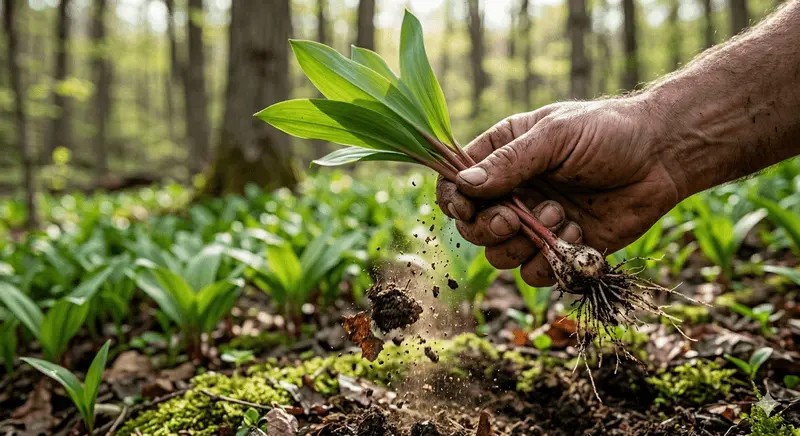
If you choose to dig the bulbs, never take more than 10% of a single patch. Spread your harvest out so the remaining plants can fill in the gaps.
3. Use the Right Tools
Avoid using a large shovel, which disturbs the delicate root systems of neighboring plants. Use a small hand trowel or a "narrow-blade" weeding tool to pop individual bulbs out while leaving the surrounding soil and "baby" leeks intact.
4. Replant the Seeds
If you visit a patch in late summer or fall, you’ll see the dried flower stalks with small black seeds. Pushing these seeds into the soil helps ensure the next generation of the colony.
Identification and Safety
Wild leeks have two or three broad, smooth, lance-shaped leaves that emerge in early April and wither away by June.
Conclusion
Harvesting leeks is a rite of passage for many in the North Country, signaling the end of a long winter. By harvesting responsibly and respecting the regulations of the Allegheny National Forest, we can ensure that the "scent of spring" remains a permanent fixture of our forest floor.