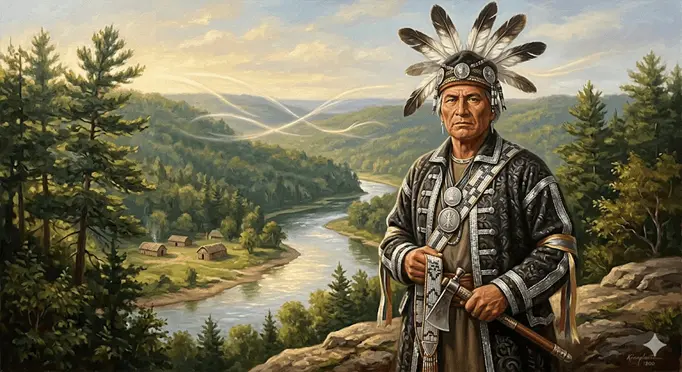
To truly understand the Kinzua region, one must look beyond the modern maps and back to the heritage of the Seneca Nation, the "Keepers of the Western Door." For the Seneca (Ohi:yo’ hga:’), this land is not just a recreational forest; it is a spiritual geography woven together by stories of origin, balance, and resilience.
The Great River and the Spirit of the Winds
The Allegheny River, known in the Seneca language as Ohi:yo’ (The Good River), serves as the central artery of this mythology. Traditional stories tell of Ga-oh, the Spirit of the Winds, who resides in the northern sky. It is said that Ga-oh controls the seasons by commanding the Great Bear (the North Wind), the Panther (the West Wind), the Moose (the East Wind), and the Fawn (the South Wind). When the winds howl through the Allegheny hemlocks, it is a reminder of this ancient celestial order.
The Gift of the Three Sisters
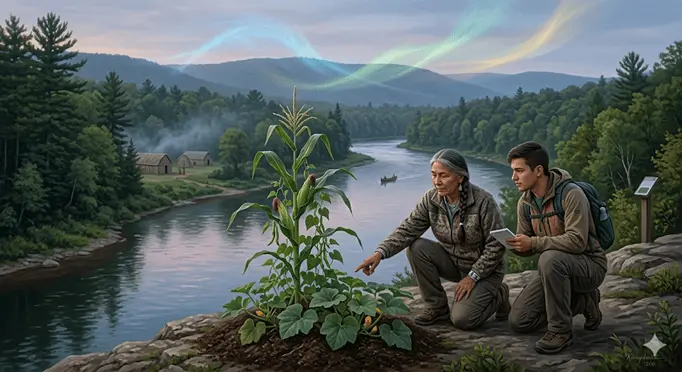
A cornerstone of Seneca life and mythology is the story of Deohako, or the "Three Sisters": Corn, Beans, and Squash.
-
The Legend: These three inseparable sisters are the physical manifestations of the spirits that sustain life.
-
The Symbiosis: In a perfect example of traditional ecological knowledge, the corn provides a ladder for the beans to climb, the beans fix nitrogen in the soil to feed the corn, and the large leaves of the squash shade the ground to prevent weeds and retain moisture.
The Legacy of the Cornplanter Tract
Any historical or mythological discussion of our region must center on the Cornplanter Tract. Named after the respected leader and diplomat Gaiantwaka (Cornplanter), this land was a sovereign gift to the Seneca people. While the creation of the Kinzua Dam in the 1960s resulted in the tragic loss of much of this ancestral soil, the spiritual connection remains unbroken. The stories of Gaiantwaka—a man who walked the line between two worlds—continue to guide the Seneca people’s stewardship of the region.
Living Traditions
Today, Seneca mythology is not a relic of the past; it is a living part of the local culture. From the Midwinter Ceremonies to the Green Corn Festival, the cycle of the year is marked by gratitude for the Creator (Shonkwaiatison) and the natural world.
By learning these stories, we gain a deeper respect for the ground we hike and the waters we fish. We realize that we are walking through a landscape that has been named, honored, and protected for centuries.