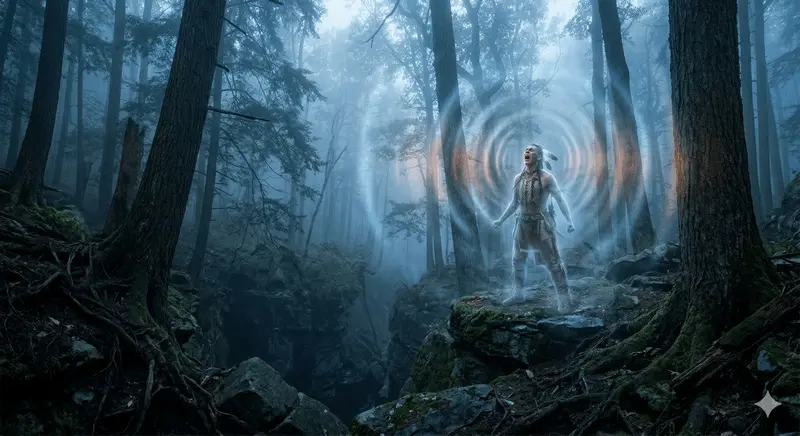
In the deepest reaches of the Allegheny National Forest (ANF), where the canopy grows so thick it swallows the midday sun, there is a silence that feels heavy—almost intentional. For centuries, travelers in these woods have reported a phenomenon that defies natural explanation: a single, bone-chilling cry that erupts from the mist and vanishes just as quickly. This is the legend of the Death Shout, a haunting piece of Seneca lore that suggests the forest does more than just grow; it remembers.
The Premise: A Warrior’s Final Defiance
According to the traditions of the Seneca Nation, the "Keepers of the Western Door," a great warrior was never meant to pass into the next life in silence. When a warrior fell in battle or succumbed to his wounds in the wilderness, his transition from this world to the Kàtshenón:ni (the world beyond the sky) was marked by a final, tremendous, and agonizing cry.
This wasn't merely a scream of pain. It was a spiritual declaration—a "Death Shout" intended to pierce the veil between worlds. It served as a final act of defiance against mortality and a signal to the ancestors that a powerful soul was en route to the celestial hunting grounds.
The Geopolitical "Shatter Zone"
Why is this lore so concentrated within the ANF? Historically, this region served as a "shatter zone"—a deeply contested borderland. For centuries, the Allegheny Highlands were a theater of conflict where the Iroquois Confederacy, the Lenape, the Shawnee, and eventually European colonial powers collided.
The soil of these valleys is soaked in the history of these skirmishes. Early 20th-century folklorists, most notably Henry Shoemaker, recorded that the sheer volume of "great deaths" in these woods left behind a spiritual residue that the geography itself conspired to keep alive.
Nature’s Sound Chamber
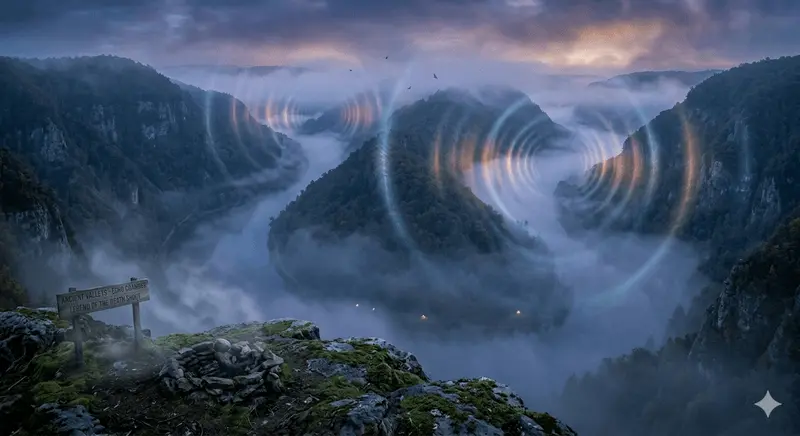
The ANF is home to a unique geological feature: the only unglaciated plateau in the region. Because the great ice sheets of the last Ice Age never flattened this land, the valleys are ancient, steep, and incredibly narrow.
-
Natural Acoustics: These tight, V-shaped valleys act as natural sound chambers. Lore suggests these stone walls "trap" the spiritual frequency of the Death Shout, allowing the echo to repeat across centuries rather than seconds.
-
The Call and Answer: The Shout was a two-way street. It was believed that if a warrior’s cry was strong enough, his ancestors would shout back from the Kàtshenón:ni to guide him home. Legends say that on the quietest, fog-heavy mornings, a lucky (or cursed) listener might hear the initial piercing yell followed by a faint, rhythmic response echoing from a place that doesn't exist on any map.
Modern Encounters: The "Unnatural" Yell
Despite the encroachment of modern life, the Death Shout hasn't faded. Today, the legend persists through the accounts of seasoned hunters, backcountry hikers, and researchers.
"It sounds like a human voice, but with a volume no human lungs could produce," one local hiker described. "It isn't the screech of a bobcat or the howl of a coyote. It’s a localized, singular event—one massive burst of sound that makes the birds go dead silent for ten minutes afterward."
These reports are most common in the "big woods" sections of the forest, far from the hum of Route 66 or the Kinzua Dam. In these remote pockets, where the wind is blocked by ancient hemlocks, the sound is said to be impossibly crisp—as if the warrior who let it loose is standing just behind the next ridge, even though he has been gone for three hundred years.
A Living Landscape
The Death Shout serves as a stark reminder that the Allegheny National Forest is not just a recreation area, but a massive, living monument to those who came before. Whether it is a trick of the wind in the unglaciated valleys or a true spiritual echo, the "Eternal Echo" ensures that the warriors of the Seneca are never truly forgotten as long as the valleys remain to hold their voices.