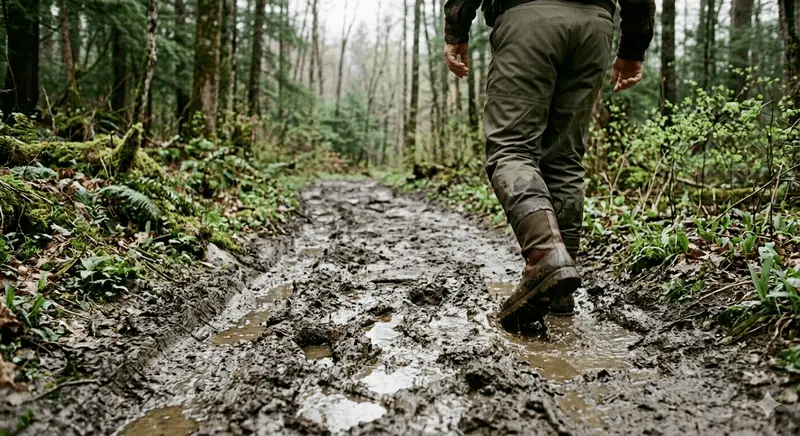
The calendar has officially turned, and while the first reliable trout hatches are still weeks away, the urge to explore the budding Allegheny National Forest is undeniable. However, the first true signal of spring on the Plateau isn't a bird or a flower; it is the arrival of 'Mud Season.'
This fleeting, messy period—roughly defined as the gap between snowmelt and the ground settling—is a volatile time for the ANF. The winter’s frost is leaving the soil, and spring rains are arriving, turning established trails into fragile, saturated waterways. Navigating the forest in April requires a different strategy. Here is your essential guide to enjoying the Plateau without leaving a trace.
The Ecology of the Thaw
Mud season is not just an inconvenience for your boots; it is an ecological crisis for the trail system. When you walk on a saturated trail, your footprint "post-holes," compressing the soil and creating channels for water to gather.
If hundreds of hikers do this, the trail widens dramatically. Hikers, attempting to avoid the deepest mud, step around the path, trampling delicate spring ephemerals (like trout lilies and trillium) and destroying the root structures that hold the trail bank together.
Field Note: The phrase to remember this month is: "Walk through, not around." If a trail is too muddy to walk directly through the center, it is too fragile to hike. Turn back.
Where (and How) to Recreate in April
Recreation is possible in April, but it requires prioritizing infrastructure over deep-forest immersion.
1. The Paved Advantage
April is the best time to explore the ANF’s hard-surface options. The pavement can handle the weight of users, and the surrounding water (streams and lake shores) are usually accessible without crossing miles of soft soil.
-
Recommendation: The bicycle trails at Chapman State Park or the paved interpretive loop near the Kinzua Skywalk. You get the fresh air, the budding tree canopy, and the scenic views without creating erosion.
-
Recommendation: Prioritize low-elevation roads that run parallel to established water bodies, such as the roads accessing the Clarion River.
-
Footwear: Leave the lightweight trail runners at home. If you must hike, wear dedicated waterproof, full-height boots. The height of the boot gives you the confidence to walk directly through the center of a muddy puddle (where the firmest ground often is) rather than contributing to trail-widening by stepping to the edge.
-
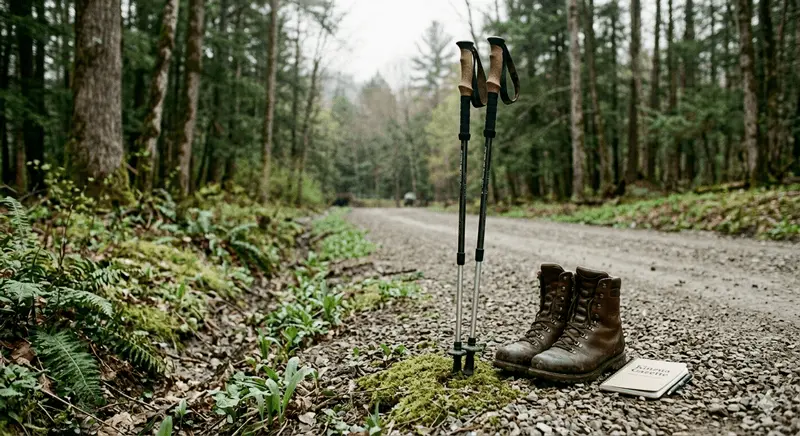
Poles: If you use trekking poles, use rubber tips. The bare metal spikes can puncture and destabilize the trail base.
2. Gravel Forest Roads
The extensive network of unpaved, gravel Forest Service roads is ideal for early spring exploration. These roads have built-in drainage and firm bases designed for logging trucks. They offer miles of walking or "gravel grinding" (cycling) through the emerging greens.
3. High-Elevation and North-Facing Trails (Avoid)
Avoid deep wilderness trails, especially those that have a high water table or face North. The frost lingers longest here, and they will remain saturated well into May. Popular summer treks like segments of the North Country Trail (NCT) or the loop into the Hickory Creek Wilderness are most vulnerable right now.
Ethical Outfitting
Your gear choice directly affects the health of the trail.
The Forecast for the Soil
We estimate that most high-use trails in the ANF will not be fully dried and "settled" until at least May 10th.
Sidebar: Leasing the Mud, Not the Trace
When you see a footprint that holds water, you are looking at a trail that has been functionally eroded for that season. That post-hole won't disappear when the ground dries; it will simply become a hard, ankle-twisting divot. Honor the ANF by choosing to walk where your weight will be carried without damaging the path.