Deep within the Allegheny National Forest in Pennsylvania lies Rimrock Overlook, a destination that feels like a hidden cathedral of the natural world. While many visitors come for the sweeping vistas of the Allegheny Reservoir, the true magic of Rimrock lies in its unique geological architecture—a blend of towering sandstone cliffs, ancient stairways, and a rare microclimate that defies the seasons.
The Rimrock Overlook: A Window to the Allegheny
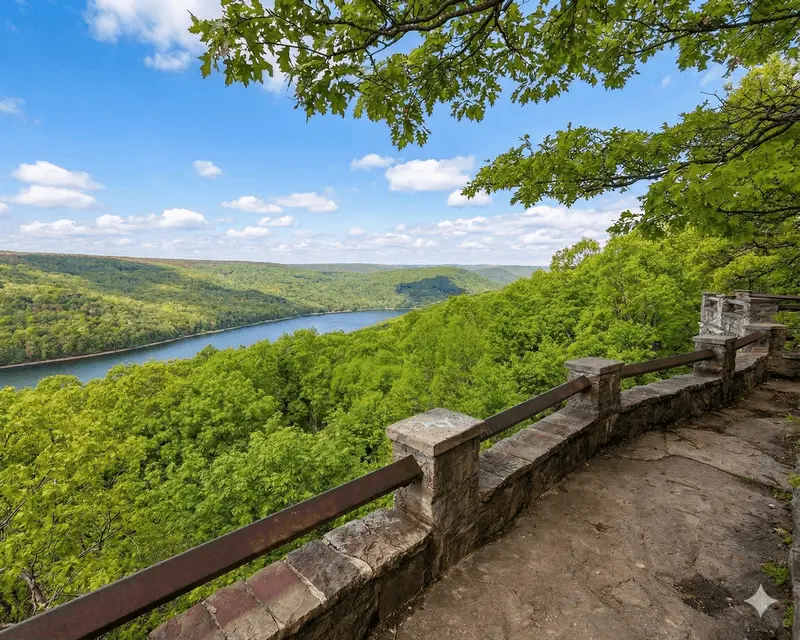
Perched high above the water, the overlook provides one of the most dramatic views in the Eastern United States. From the Kinzua Beach area below, the cliffs of Rimrock appear as a jagged crown atop the mountain. Once you reach the summit, the forest floor gives way to massive blocks of Olean Conglomerate—sandstone filled with smooth white quartz pebbles. The panoramic view of the sparkling reservoir and the rolling green hills of the Allegheny plateau is breathtaking, particularly during the vibrant foliage of autumn.
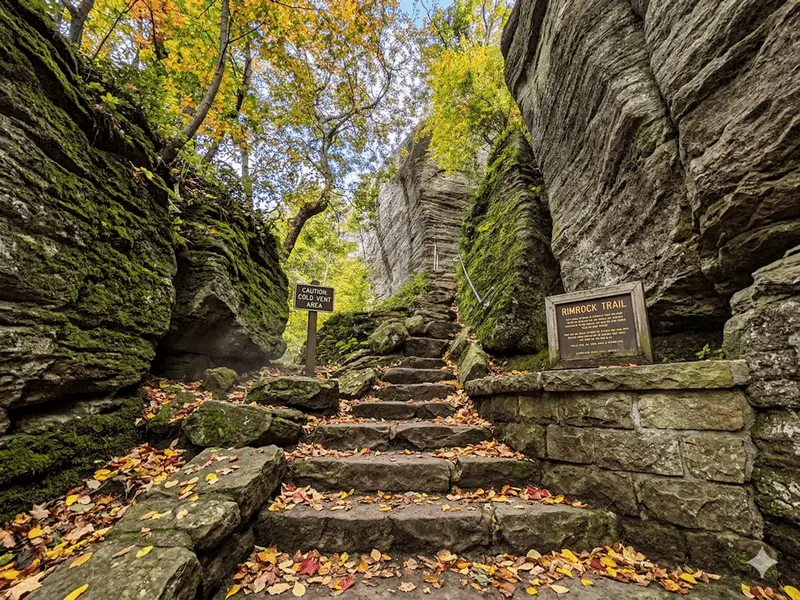
Descending the Great Stone Staircase
While the view is the primary draw, the journey through the rock itself is the highlight for many hikers. To reach the lower trail from the overlook, visitors must descend a magnificent stone staircase.
These steps were carved directly into a narrow "joint" or fracture between two massive sandstone monoliths. As you walk down, the walls of moss-covered rock rise up on either side, creating a cool, damp canyon effect. The staircase is a testament to early trail-building, seamlessly integrating human passage into the rugged landscape.
The Mystery of the "Cold Vents"
Perhaps the most fascinating feature of Rimrock is its geothermal cold vents. As you explore the base of the cliffs and the small, shallow caves (often called "rock cities" or "talus caves"), you may notice a sudden, dramatic drop in temperature.
Even on a sweltering 90-degree summer day, icy air often breathes out from the dark crevices between the rocks. This phenomenon occurs because the massive sandstone blocks are porous and deeply fractured. During the winter, heavy, cold air sinks into the deep recesses of the mountain and becomes trapped. Because the rock is such an excellent insulator, this "reservoir of winter" remains chilled throughout the year.
In some spots, these vents are so effective that ice can be found deep within the crevices well into July. These micro-habitats support rare mosses and plants that are usually found much further north in the Arctic tundra, thriving in the permanent air-conditioned draft of the Rimrock caves.
Visiting Rimrock
Rimrock is accessible via a relatively easy drive to the upper parking area, followed by a short walk to the overlook. For those seeking a challenge, the Rimrock Hiking Trail connects the overlook to the Kinzua Beach area, a steep but rewarding 1.3-mile trek that takes you through the heart of the boulders and cold vents.
Whether you are there for the photography, the geology, or the simple thrill of standing between ancient stone walls, Rimrock serves as a powerful reminder of the quiet, enduring wonders of the natural world.