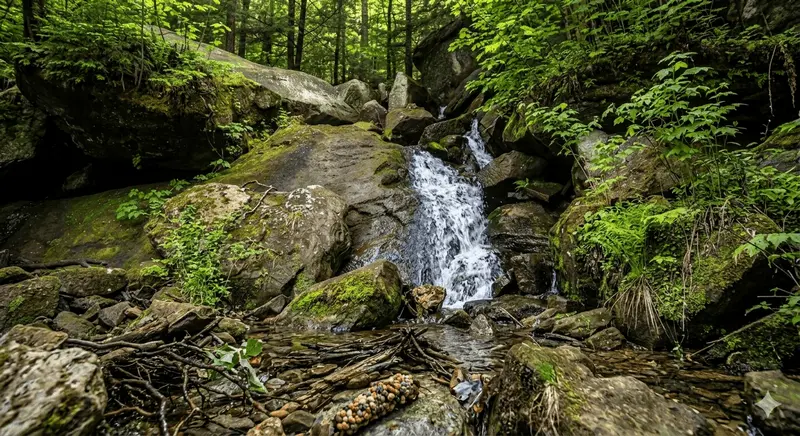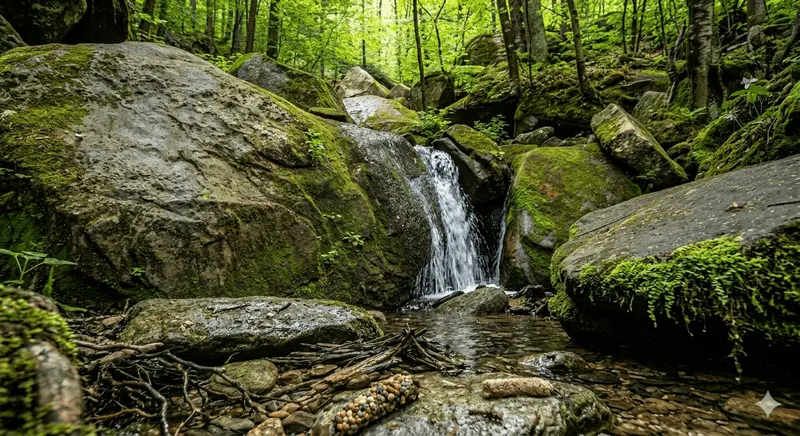
Nestled within the vast, pristine wilderness of the Allegheny National Forest in Warren County, Pennsylvania, Bent Run Falls stands as a captivating, hidden gem. Far from the busy roads and developed parks, this enchanting waterfall offers a tranquil escape, inviting visitors to experience the raw, untouched beauty of the Appalachian Plateau. While not the tallest or most voluminous waterfall in the region, Bent Run's multi-tiered cascade, rugged gorge, and diverse ecosystem create a memorable and immersive natural experience.
A Geological Wonder in Stone
The beauty of Bent Run Falls is intrinsically linked to the fascinating geology of the region. The multi-tiered cascade is carved through a dramatic exposure of Upper Devonian strata (rock layers), particularly the Canadaway and Conneaut Groups, formed approximately 360 to 370 million years ago. The distinct architecture of these rock layers is what creates the waterfall and the unique ecosystem that surrounds it.
The cliff face at the falls is a powerful chronological map. It is composed primarily of alternating layers of dense, impermeable grey siltstones and shales, and more permeable sandstone "benches." Interspersed within these grey bands are the hallmark reddish-brown mudstones of the region. These "red beds" represent ancient paleosols (fossil soils) that formed on the dry parts of the Catskill Delta plain. Their reddish color comes from the oxidation (rusting) of iron minerals when exposed to the air millions of years ago, indicating periods when the sea had receded.
Finding these red beds at Bent Run Falls means this specific spot was, for a time, a muddy floodplain or estuary rather than the sea floor, offering an unparalleled glimpse into ancient environments. The harder, more protruding horizontal layers that aren't weather away as quickly as the shale are the sandstones, which represent pulses of higher-energy water carrying larger sand particles into the basin.
The Cold Vents and Unique Micro-Habitats
Perhaps the most fascinating and scientifically significant phenomenon associated with Bent Run Falls and the surrounding gorge is the presence of "cold vents." During the?, brutal winter, heavy, cold air sinks into the deepest, narrowest fractures and crevasses within the Olean conglomerate rock that caps the area. Because this massive stone is such an effective insulator, this reservoir of heavy, winter-chilled air is trapped.
In the summer, the warmer air above draws the cold air upward through the vents. This effect creates remarkable stable, cold, and damp micro-habitats, supporting rare mosses, lichens, and ferns more typically found much further north in the Arctic tundra. These species thrive in the permanent air-conditioned draft of the Allegheny fissures. The resulting "weeping" effect visible on the rock face is groundwater moving through the permeable sandstone layers and being forced out when it hits an impermeable shale layer.
A Hotspot for Forest Floor Diversity
The complex architecture of the rock and the cool, damp micro-climate create an incredibly vital "riparian zone" where the terrestrial and aquatic ecosystems overlap. This zone is a hub of heightened biodiversity.
The gorge is intrinsically linked to the surrounding forest canopy. The cover regulates water temperature by providing shade, keeping the water cool – a requirement for many cold-water species like native brook trout and rare hellbenders (Pennsylvania's state amphibian). Trees also contribute the primary food source for many shredding macroinvertebrates through leaf fall, which fuels the aquatic food web. Furthermore, the root systems of riparian trees stabilize banks, reducing erosion and input of excess sediment.
The forest floor at Bent Run Falls is a vibrant tapestry. It is covered in a intricate carpet of damp woodland mosses (matching the moss on the rocks) and complex, detailed organic detritus that perfectly transitions to the large rock base. Scattered across this mossy ground are the intricately carved wooden caddisfly cases, diverse larval stoneflies and mayflies, small pebbles, leaves, and various natural organic detritus that tell the story of a healthy, dynamic ecosystem. The forest canopy includes green maples, sassafras, hemlocks, with some spring flowers creating intricate patterns of light and shadow.
A Protected Place
Despite their significance, these small streams and unique habitats are often more vulnerable to disturbance and pollution than larger bodies of water. Even minor changes in the landscape, such as poor forestry practices, road construction, or septic system failures, can significantly alter their physical characteristics, chemical composition, and biological communities.
Protecting the diverse life within Bent Run gorge requires an integrated conservation approach. This involves maintaining healthy forest cover and robust riparian buffers, preventing non-point source pollution, and managing activities across the landscape to minimize impacts on headwaters. Understanding the geology and ecological functions of this hidden gem, and recognizing its value as a micro-world of biodiversity, is the crucial first step toward ensuring the health and resilience of the entire Allegheny ecosystem for generations to come.