The vast, shimmering surface of the Allegheny Reservoir often steals the spotlight in any description of the Allegheny National Forest (ANF). But the reservoir's lifeblood, and a significant part of the ANF's ecological tapestry, flows from the countless tiny streams, brooks, and trickles that feed it. These unassuming tributaries are not just physical conduits for water; they are rich, complex, and often overlooked micro-worlds of diverse biological life.
Hidden Networks of Life
While major tributaries like the Kinzua Creek and Willow Creek are well-known, the landscape of the ANF is carved by thousands of first- and second-order streams. Many of these are seasonal, flowing only during wet periods, but even in their ephemeral state, they play crucial roles. They form a vast, interconnected network, draining the extensive forested uplands of the Allegheny Plateau into the reservoir.
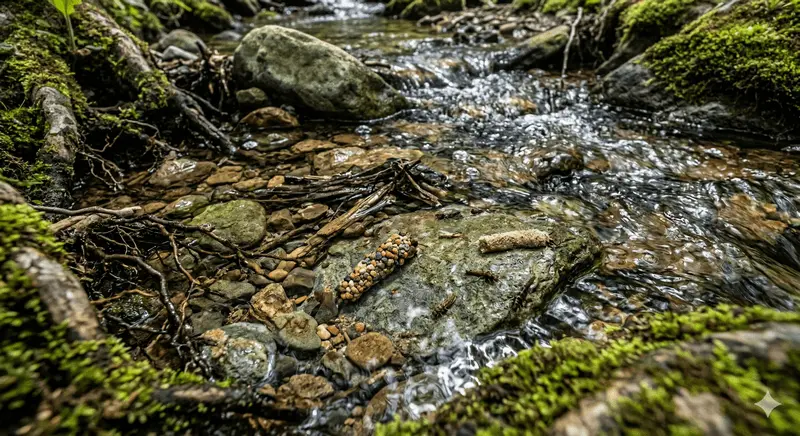
The biology within these tiny streams is surprisingly diverse and highly specialized. This diversity starts with the physical environment. Unlike the slow-moving waters of the reservoir, these small streams often possess steep gradients, rapid currents, and varied substrates (the bottom material). This creates a mosaic of habitats: from turbulent riffles to quiet pools, from smooth boulders to fine gravel beds and thickets of submerged roots.
The Foundation of the Food Web: Macroinvertebrates
One of the most remarkable and ecologically vital communities within these small streams is the benthic macroinvertebrates. These are insects, crustaceans, mollusks, and worms that live on the stream bottom and are large enough to be seen with the naked eye. In small, forested streams, they are the primary architects of the aquatic food web.
These macroinvertebrates have evolved ingenious adaptations to survive the stream's current and dynamic nature. Stonefly and mayfly larvae, for instance, are flattened, allowing them to cling to rocks and find refuge in the boundary layer where the current is weakest. Caddisflies are renowned architects, building intricate cases from sand, small pebbles, or leaf fragments to protect their soft bodies and blend in with their surroundings. These cases can be stationary or portable, tailored to different flow conditions.
These organisms are incredibly varied in their feeding strategies. Scrapers and grazers feed on the biofilm (a mix of algae, bacteria, and fungi) that coats surfaces, effectively "cleaning" rocks. Shredders break down large pieces of organic matter, like the leaves that fall from the surrounding forest canopy. Collectors and filter feeders filter tiny particles of food suspended in the water column. The presence, absence, and abundance of these different groups provide invaluable information about stream health, making macroinvertebrates essential bioindicators for water quality.
Beyond Insects: A World of Diverse Fauna
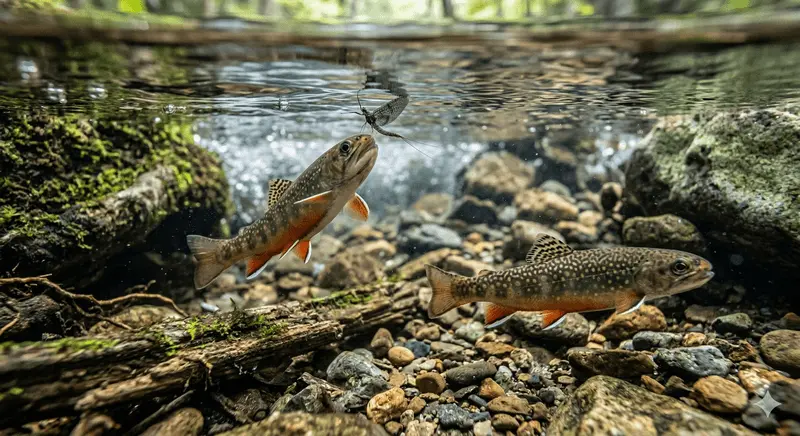
The life in these small streams extends far beyond insects. Several species of small fish are perfectly adapted to the varied habitats. Dace, darters, and sculpins, with their varied shapes and specialized behaviors, navigate the riffles and pools. Larger predatory fish, including the brook trout (a native salmonid found in the coolest, cleanest streams), utilize these small tributaries for spawning and as nurseries for their young, relying on the abundant macroinvertebrate food source.
Amphibians are also significant residents. The ANF's small streams are critical habitat for numerous salamander species. The elusive hellbender, Pennsylvania's state amphibian and a creature of deep concern, inhabits some of the larger, rocky streams. Red-backed, two-lined, and northern dusky salamanders, among others, can be found in the damp leaf litter and rock crevices along the banks and within the splash zones.
Even the terrestrial world directly depends on these small streams. Water birds, such as American dippers, and various mammals, like river otters and mink, are often drawn to the complex and abundant life they contain.
The Role of Forest Cover and "Edge Effects"
The biology of these small streams is intrinsically linked to the surrounding forest canopy. This connection exemplifies the intricate and complex nature of the ecosystem. The forest cover regulates water temperature by providing shade, keeping the water cool – a requirement for many cold-water species like brook trout and hellbenders. Trees also contribute the primary food source for many shredding macroinvertebrates through leaf fall, which fuels the aquatic food web. Furthermore, the root systems of riparian (streamside) trees stabilize banks, reducing erosion and input of excess sediment.
This relationship creates a vital "riparian zone" or edge effect, where the terrestrial and aquatic ecosystems overlap. This zone is a hub of heightened biodiversity, as many species utilize both the forest and the stream for different needs. The overall health and integrity of the entire Allegheny National Forest is profoundly dependent on protecting these small streams and the forests that nourish them.
Vulnerabilities and Conservation
Despite their significance, these small streams are often more vulnerable to disturbance and pollution than larger bodies of water. Even minor changes in the landscape, such as poor forestry practices, road construction, or septic system failures, can significantly alter their physical characteristics, chemical composition, and biological communities. Excessive sedimentation, increased water temperature from loss of shade, and contamination from nutrients or toxins are all common threats.
Protecting the diverse life within these tiny streams requires an integrated conservation approach. This involves maintaining healthy forest cover and robust riparian buffers, preventing non-point source pollution, and managing activities across the landscape to minimize impacts on headwaters. Understanding the biology and ecological functions of these small streams, and recognizing their value as micro-worlds of biodiversity, is the crucial first step toward ensuring the health and resilience of the entire Allegheny Reservoir ecosystem for generations to come.