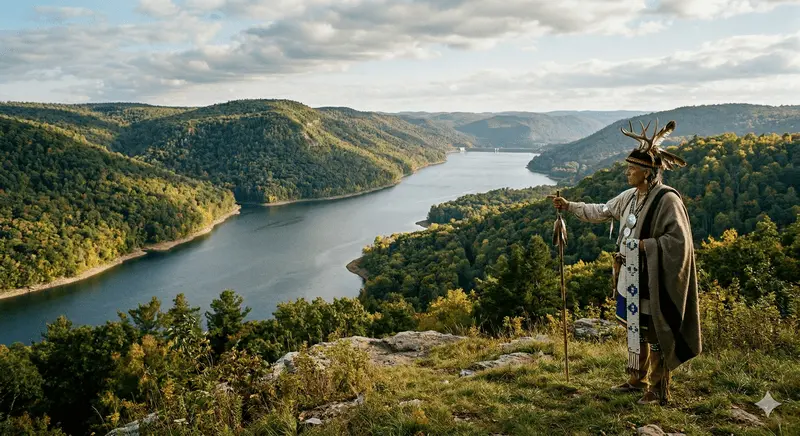
In the symbolic architecture of the Haudenosaunee Confederacy, the world was not a collection of maps and borders, but a single, massive longhouse stretching across the Northeast. At the sunrise side stood the Mohawk, the Keepers of the Eastern Door. In the center sat the Onondaga, tending the Council Fire. But at the sunset side, guarding the wild frontier of the Allegheny River Valley and the Great Lakes, stood the Seneca. They were the Onödowága’—the People of the Great Hill—known to history by their sacred title: The Keepers of the Western Door.
To understand the history of the Allegheny National Forest region is to understand the gravity of this role. As the Western Keepers, the Seneca were the primary power brokers for a continent in transition. They were the most populous and militarily formidable of the Iroquois nations, serving as a human shield that protected the Confederacy from encroaching tribes to the west and, eventually, from the colonial hungers of Europe.
The Seneca’s strength was rooted in their mastery of the Ohi-yo, the "Beautiful River" we now call the Allegheny. Unlike the nomadic depictions often found in early American myths, the Seneca were sophisticated agrarian masters. They lived in permanent towns surrounded by thousands of acres of "The Three Sisters"—corn, beans, and squash—planted in polyculture systems that outproduced European farms. Their orchards of apple and peach trees were so vast they were described by colonial travelers as a "limitless forest of fruit."
This mastery made them a target during the American Revolution. In 1779, General George Washington ordered the Sullivan-Clinton Expedition, a scorched-earth campaign designed to break the Seneca’s back. American troops marched through the heart of the Western Door, burning over forty towns and destroying 160,000 bushels of corn in a single season. This devastation earned Washington the Seneca name Hanödaga’yas, or "Town Destroyer," a title the Seneca still use for the President of the United States in certain ceremonies today.
Yet, the "Western Door" did not break. Under the leadership of figures like Chief Cornplanter, the Seneca navigated the brutal birth of the United States with a blend of fierce independence and calculated diplomacy. They secured the Pickering Treaty of 1794, signed by Washington himself, which promised that their lands would remain theirs "as long as the grass shall grow."
For nearly two centuries, that door remained open, centered on the sovereign sanctuary of the Cornplanter Grant in Pennsylvania. It was a place where the Seneca language and the Longhouse religion flourished, even as the world around them was clear-cut for timber and drilled for oil.
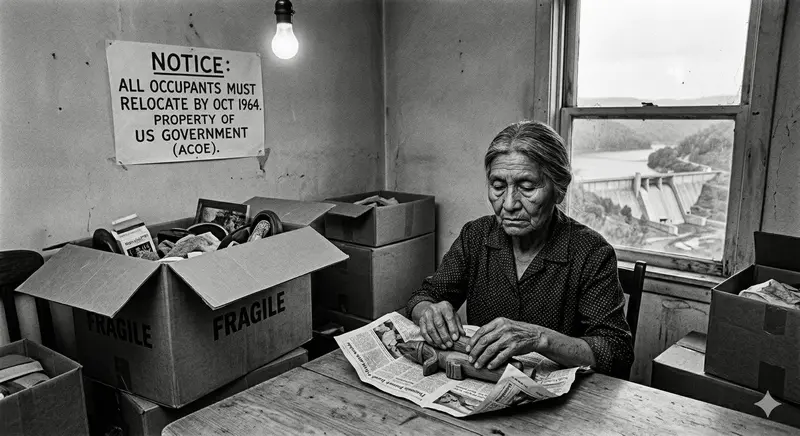
The most modern tragedy for the Keepers of the Western Door came in the 1960s with the construction of the Kinzua Dam. In a direct violation of the 1794 treaty, the federal government flooded 10,000 acres of ancestral Seneca land to protect Pittsburgh from floods. The closing of the dam's gates effectively submerged the heart of the Western Door, forcing 600 families to flee as their homes and even the graves of their ancestors were destroyed by the rising waters.
Today, the legacy of the Seneca persists as a testament to resilience. Though the physical valley of the Cornplanter Grant lies beneath the Allegheny Reservoir, the Seneca Nation remains a sovereign, self-governing power. They continue to be the spiritual and cultural stewards of the region, reminding us that the "Western Door" was never just a point on a map—it was a promise of protection, a standard of agriculture, and a gateway to a heritage that refused to be washed away. When you stand on the overlooks of the Allegheny National Forest today, you are looking at more than a landscape; you are looking at the ancestral home of a people who have spent centuries standing guard at the edge of the world.