The Allegheny National Forest (ANF) and Kinzua region are famed for their rolling, deeply dissected plateaus, sprawling oak forests, and the massive Allegheny Reservoir. However, the true wildness of this corner of the Pennsylvania Wilds extends downward, into a rugged, hidden world of fractured stone and ancient geological mystery: its natural caves.
This region is not home to the vast, decorated limestone caverns found in central and southeastern Pennsylvania. Instead, its "caves" are typically smaller, colder, and formed by the unique interplay of bedrock, time, and the ancient forces of moving ice. For the adventurous traveler, these hidden pockets offer an experience closer to raw geological discovery than to a traditional show cave tour.
Rock Cities and Crevice Caves: A Legacy of Ancient Ice
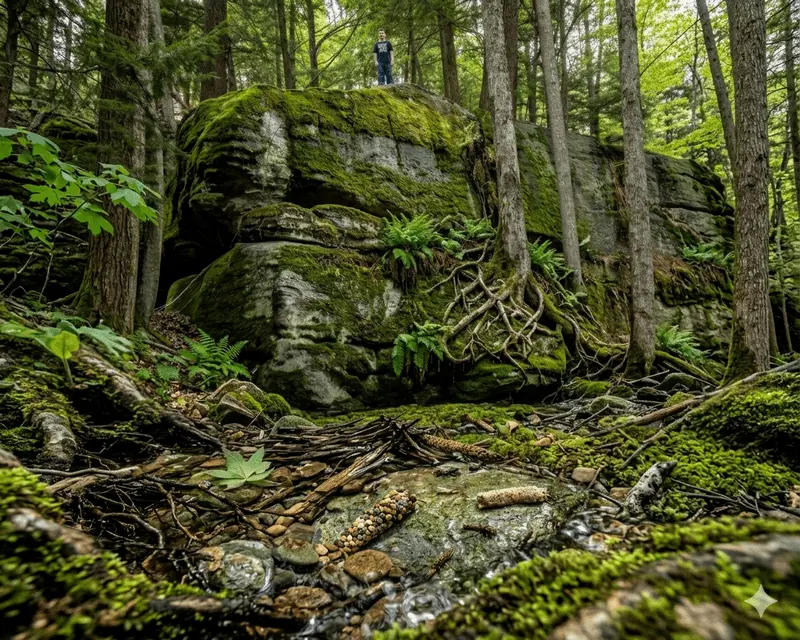
The defining characteristic of natural "caves" in the ANF is their relationship to the Olean Conglomerate, a massive, ancient sandstone bedrock formed hundreds of millions of years ago when Pennsylvania was at the mouth of a massive river delta. The Olean is tough, porous, and highly fractured.
The formation of the region's caves is often linked to the Illinoisan Glaciation, which reached its maximum extent just north of the present-day ANF. As massive glaciers advanced and retreated, they dramatically altered the landscape. While they didn't carve standard solution caves, their immense weight and the freeze-thaw cycles they induced caused the existing fractures in the Olean conglomerate to widen, collapse, and separate.
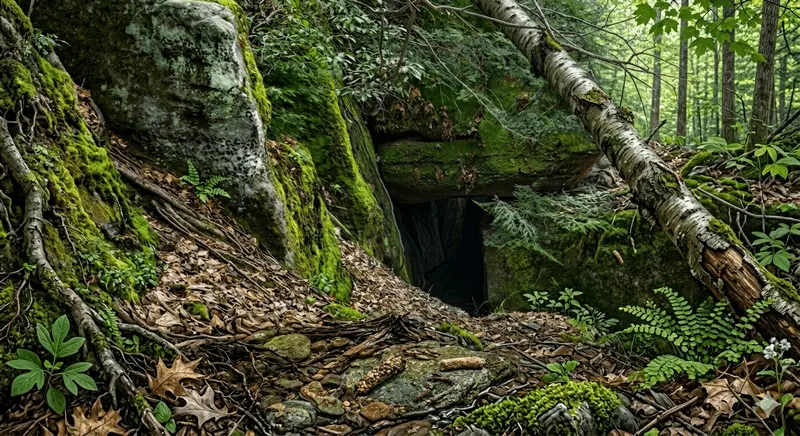
This created "rock cities"—dense labyrinths of massive, monumental boulders split by narrow, deep crevices. These crevices, often called "talus caves" or "fissure caves," are the most common type of natural void in the region. They aren't standard caverns with stalactites, but they possess a rugged, vertical architecture, creating cold, damp canyons and small, dark rooms between the bedrock monoliths.
The Cold Vents of the Allegheny: Reservoirs of Ancient Winter
Perhaps the most fascinating phenomenon associated with these fissure caves is the "cold vent." On the hottest, most humid days of summer, if you are exploring a rock city and approach certain dark crevices, you will feel a dramatic, surprising drop in temperature. From some vents, icy air breathes out with enough force to visibly ripple foliage.
This is not a traditional geothermal effect. Instead, it’s a form of gravity-driven ventilation. During the long, brutal winters, heavy, cold air sinks into the deepest, narrowest fractures of the conglomerate rock. Because these massive stones are such effective insulators, this reservoir of heavy, winter-chilled air is trapped. In the summer, the warmer air above draws the cold air upward through the vents. In some rare spots, these vents are so effective that ice can be found in the deepest, dark corners well into the middle of summer.
These micro-habitats are incredibly stable, providing unique ecosystems. They support rare mosses, lichens, and ferns that are more typically found much further north in the Arctic tundra, thriving in the permanent air-conditioned draft of the Allegheny fissures.
Visiting the Fissures: Where to Go and Safety
Visiting the natural caves of the ANF requires a different approach than visiting a show cave. They are hidden, remote, and often require careful navigation.
-
Rimrock Overlook: While primarily famous for its stunning panoramic view of the Allegheny Reservoir, Rimrock provides an accessible way to experience Olean formation geometry. As you descend the dramatic stone staircase from the overlook to the lower trail, you are walking through a narrow fracture or "joint" between two monumental blocks. This is a classic example of the type of fissure that, when deeply eroded, forms a talus cave.
-
Exploring Rock Cities: To find the true cold vents and deep fissures, you need to explore the surrounding landscape, often off of designated trails. It is essential to remember that "cave" is used loosely; you won't find decorated rooms. These are rugged, raw geological formations.
-
White-Nose Syndrome: Natural caves across North America are under a profound threat from White-Nose Syndrome, a devastating fungal disease that has decimated bat populations. In Pennsylvania, all non-commercial (wild) caves are subject to specific access restrictions to prevent the accidental spread of the fungus. Always check current regulations from the U.S. Forest Service before attempting to access any wild cave or crevice, and adhere to all "White-Nose Syndrome Protocol." This usually means staying out of any void during bat hibernation season (fall through spring) and strictly decontaminating all gear after any visit.
-
Preparation is Key: Wild caving is an inherent risk. If you are exploring fissure areas, always carry at least three sources of light, wear a sturdy helmet, and explore with a group. These fissures are often very steep, slick with mud and moss, and have complex, tricky vertical drops.
-
Leave No Trace: Fissure caves are fragile ecosystems. Do not touch or disturb any organisms (including rare mosses), pack out all trash, and treat these ancient stone formations with the respect due to one of Pennsylvania’s last true, rugged wildernesses.
Important Safety and Conservation Practices
Natural caves and fissures are delicate environments and are inherently dangerous for the unprepared.