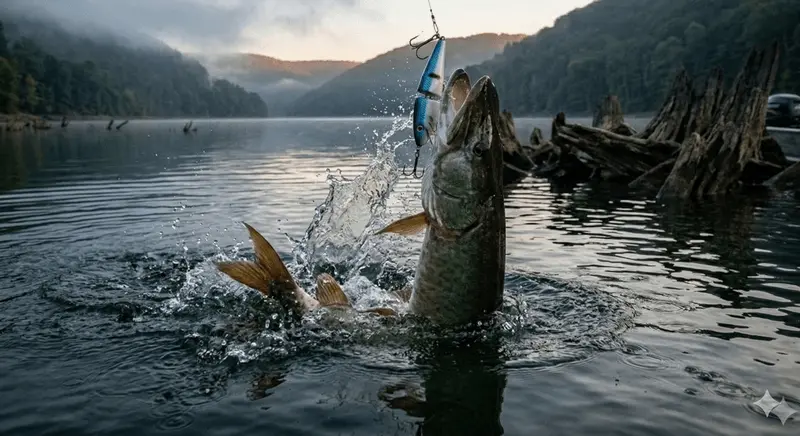
Thick, dark, and plunging to depths of over 130 feet, the waters of the Allegheny Reservoir—locally known as Kinzua—hide more than just the drowned foundations of old Seneca homesteads. Beneath the surface of this 21,000-acre expanse, a prehistoric apex predator reigns supreme.
This is the home of the Muskellunge (Esox masquinongy), a fish so elusive, so aggressive, and so massive that it has earned the title "The Fish of Ten Thousand Casts." But in the deep timber of Kinzua, they aren't just fish; they are monsters.
The Ghost of the Deep Timber
What makes the Kinzua Musky different from those found in shallow glacial lakes is the environment. When the valley was flooded in the 1960s, thousands of acres of standing hardwood trees were submerged. This created a "vertical forest" underwater—a labyrinth of jagged branches and deep drop-offs that provide the perfect ambush cover for a 50-inch predator.
Anglers who hunt these monsters don't just fish; they go to war with the terrain. A Kinzua Musky doesn't just bite; it strikes with a force that can wrench a rod from a relaxed hand, often retreating instantly into the "dead sea" of submerged timber to snap 80-pound test line like sewing thread.
Why Kinzua Produces Giants
The reservoir is a unique ecological "perfect storm" for growing trophy fish:
-
The Forage Base: The reservoir is teeming with gizzard shad and oily alewives. This high-protein diet allows Muskies to pack on girth at an astonishing rate.
-
Thermal Refuge: Because the reservoir is so deep, it stays cool even in the blistering Pennsylvania summers. Muskies, which prefer cooler water, can thrive year-round without the heat stress found in shallower lakes.
-
Low Pressure: Due to the sheer size of the lake and the difficulty of navigating the "stump fields," many of these fish live their entire lives without ever seeing a lure.
The Legend of the "Kinzua Kicker"
Every local bait shop from Warren to Bradford has a story. There are tales of "logs" that suddenly swam away when a boat drifted over them, and sightings of fish so long they looked like sunken canoes.
The current Pennsylvania state record for Muskellunge was set in 1924 (54 lbs, 3 oz), but many veteran Kinzua anglers believe the fish that will eventually break that century-old record is currently lurking near the submerged bridge abutments of the old Wolf Run marina. In recent years, several "50-plus" inchers have been caught and released, fueling the fire of the legend.
3 Tips for Hunting the Monster
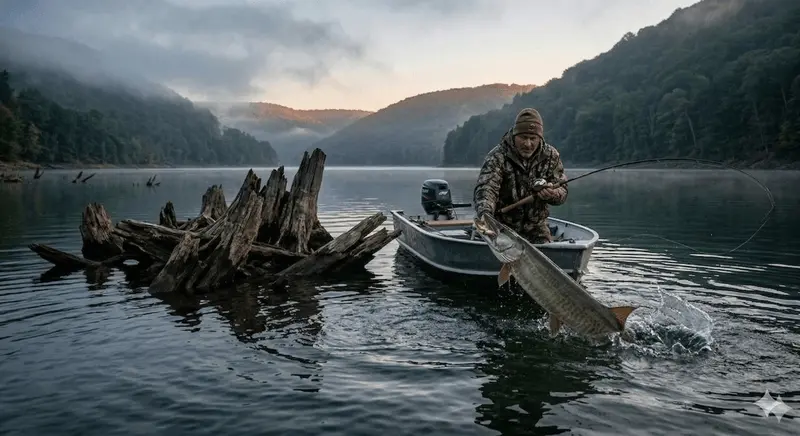
1. The "Figure-Eight" is Non-Negotiable
Muskies are famous for following a lure right to the boat. Never pull your lure out of the water without performing a wide, deep "figure-eight" motion with your rod tip. Many Kinzua monsters are hooked less than two feet from the propeller.
2. Think Big, Then Think Bigger
In a lake full of 10-inch shad, a small lure won't get a look. Serious Kinzua hunters use "rubber" baits (like Mag Dawgs) or jointed crankbaits that are 12 to 14 inches long. You are looking for a reaction strike from a fish that wants a full meal.
3. Target the "Points of Interest"
Focus on where the steep mountain walls meet the submerged river channel. These "points" act as highways for baitfish. Use side-imaging sonar to find submerged "cribs" or stands of timber where a monster might be waiting in the shadows.
The Kinzua Musky is a test of will. It is a pursuit for the patient, the hardy, and those who don't mind a day of "ten thousand casts" for one heart-stopping second of violence. Whether you catch one or not, being on the water at dawn, watching the mist rise off the reservoir while knowing a four-foot predator is watching from the shadows, is a haunt you won't soon forget.